Pre-Construction Home Appraisal Lower Than Purchase Price in Alberta: What Happens Next?
What Happens When a Pre-Construction Appraisal Is Lower Than Purchase Price?
When a lender appraises a property below the agreed contract price, the mortgage is typically based on the lower of the two values.
For example:
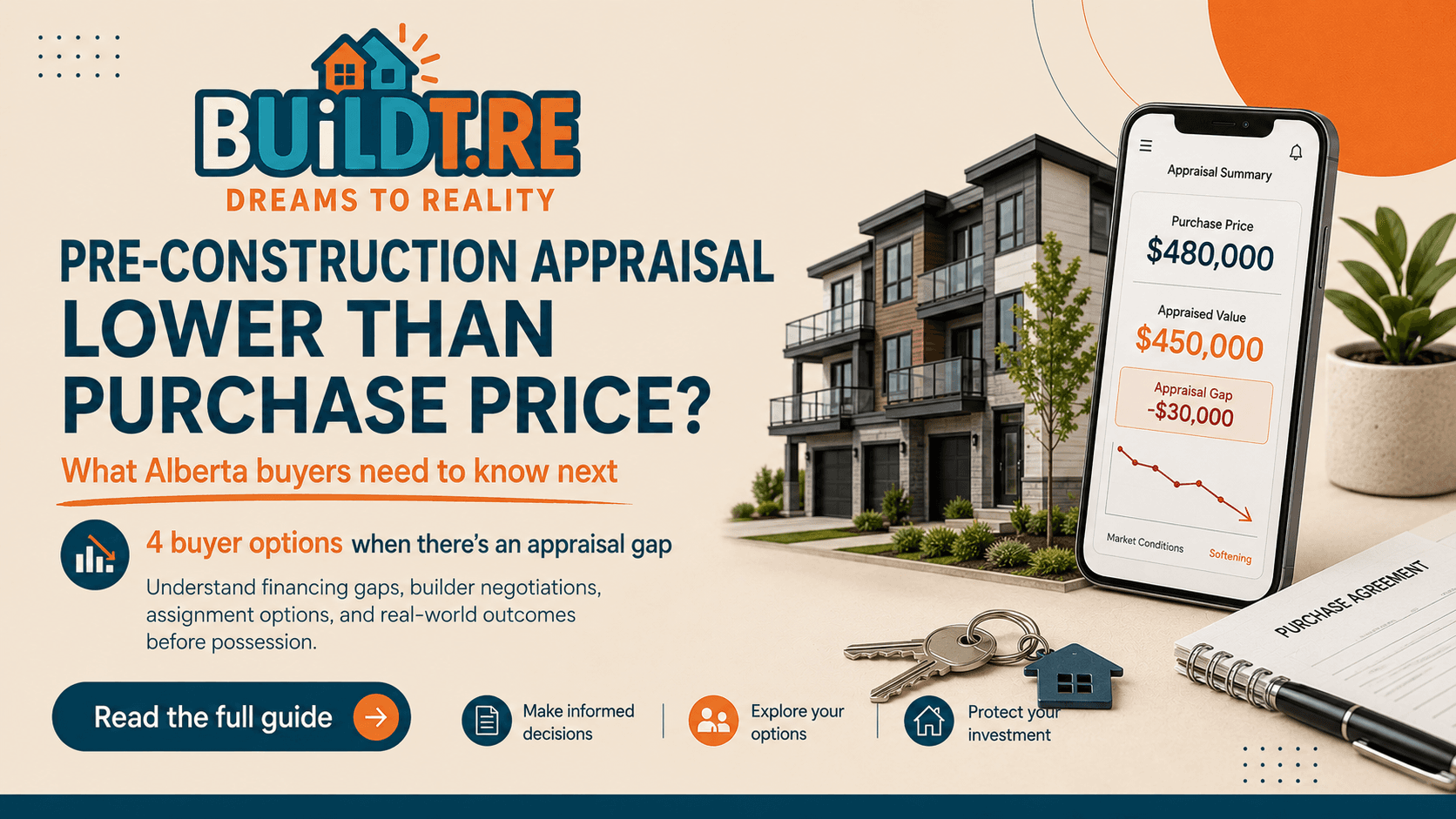
Purchase price: $480,000
Appraised value: $450,000
In most cases, lenders will finance based on the $450,000 valuation, not the contract price.
This creates a financing gap that the buyer must either:
Cover in cash, or
Resolve through renegotiation or restructuring
This is commonly referred to as an appraisal gap in pre-construction real estate.
Case Example: Alberta Pre-Construction Townhouse
A real-world Alberta case involved a pre-construction townhouse purchased at $480,000 with a 20% deposit.
At completion:
Market value had declined to approximately $420,000–$450,000
The lender appraisal came in at $450,000
This created a $30,000 gap between the contract price and appraised value.
Buyer Options When Appraisal Is Lower Than Contract Price
When this situation occurs, buyers generally have four main options:
1. Close on the Property and Cover the Appraisal Gap
If the lender finances based on the lower appraised value, the buyer must cover the difference between the mortgage amount and the contract price.
This can include:
Additional cash required at closing
Increased financial strain due to over-market purchase price
This option is typically chosen when buyers want to avoid losing their deposit or facing legal consequences.
2. Renegotiate with the Builder
In a declining market, some builders may be open to restructuring the deal.
Common adjustments include:
Price reduction to match market value
Closing cost credits
Upgrades or incentives
Extended possession timelines
Builders often prefer restructuring over contract collapse because it reduces legal and resale risk.
3. Assignment of Contract (If Permitted)
Some pre-construction agreements allow assignment sales, subject to builder approval.
In a soft market:
Assignment price may be lower than original purchase price
Buyer may still incur a loss but can exit the contract
Builder approval and fees may apply
4. Contract Termination or Default (Highest Risk Option)
If a buyer refuses to close without agreement:
The builder may retain the deposit
The unit may be resold
The builder may pursue damages depending on contract terms and resale outcome
This is generally considered the highest-risk scenario and should only be considered after legal advice.
Builder Response in a Soft Market
Builders in declining markets often prioritize contract retention over enforcement. This is especially true when:
The project has multiple units still available
Market pricing has softened
The buyer has already placed a significant deposit
Resale risk is high
In many cases, builders may offer alternative units or restructuring options to preserve the transaction.
Case Outcome: Deposit Conversion Into a New Purchase
In the Alberta case referenced above, the builder agreed to terminate the original townhouse contract.
However, the condition was that the buyer must apply the existing deposit toward the purchase of another property within the same development.
The buyer ultimately purchased a duplex at current market pricing.
Result:
Original contract terminated
Deposit preserved within builder ecosystem
Buyer moved into a market-priced asset
Builder avoided a failed contract scenario
Key Takeaways for Pre-Construction Buyers in Alberta
1. Appraisal risk is a real pre-construction risk
Pre-construction pricing does not guarantee future market value at completion.
2. Financing is based on appraised value, not contract price
Even if a buyer agrees to a higher price, lenders rely on market valuation.
3. Builders may restructure deals in soft markets
Contract termination and unit substitution are sometimes used to avoid defaults.
4. Large deposits change negotiation dynamics
A 20% deposit significantly increases the likelihood of a negotiated resolution.
Final Thoughts
Pre-construction real estate is not only about appreciation potential. It also involves timing risk, appraisal risk, and builder negotiation dynamics.
When markets shift, the outcome is often determined less by contract rigidity and more by how flexible both parties are in restructuring the deal.
In this case, restructuring created a better outcome than forcing a distressed close or triggering a default.
Looking to evaluate a pre-construction contract in Alberta? Platforms like Buildt.re are designed to help buyers and agents analyze risk before possession.